Sunday, 14 July 2024

Making room for a sea change


I recently worked on a presentation that compared the differing experience of stress for neurotypical people and for those of us with Asperger’s.  I always enjoy researching such things to see what new studies and strategies have emerged.  On this occasion, I learned about Vagal Nerve Stimulation and several other interesting approaches to reducing and managing stress.  I even used some of the techniques I learned about on my subsequent holiday, to help me manage the stress of travelling.

It wasn’t until after my return from this very relaxing break that realise I had experienced something I had never experienced before:  A truly relaxing, refreshing holiday.  I had visited the destination before, stayed in similar hotels and done similar excursions, so what was different this time?  Having ruminated on this for a week or two, I realised that my attitude towards the travel and the holiday had indeed been the factor that had changed.

I usually build up an enormous level of anxiety prior to travelling abroad – worrying about schedules, what to pack, paperwork etc.  Would there be hold ups at the airports, bad weather or turbulence?  Would the hotel be okay?  Would the weather be too hot, food awful or too expensive? Would I be disappointed?  You name it; I’d worry about it. It would take a couple of days to get over it, before beginning to worry about the journey back...

Whereas before, I had felt real pressure to enjoy the holiday; to do, and see as much as possible - this time, I had planned nothing, chosen a hotel further away from the draw of tourist attractions with nice grounds and several pools.  I had even booked the fast track options used my sunflower lanyard to see us through the airport more smoothly, and sought out the quiet areas.  I did not read on the plane – choosing instead to wear an eye-mask and listen to classical music for the duration. I did not crush my husband’s hand on take-off or scowl at unruly children. I even spoke to the cabin staff and a fellow passenger… Unheard of.

But attitude alone could not account for this success, could it?  Was pre-planning and a few breathing exercises what I had been missing all these years? I didn’t think so.  Something else had happened that had made this new attitude possible, allowing me to access and use these strategies to better effect. I took me a while, but I finally understood:  This is what can happen you when you have the capacity.  

In the presentation I had been working on, was a graph showing the increased ‘baseline’ of stress that people with Asperger’s have to contend with.  This baseline stress is much higher than that of neurotypical people, as it comprises all the additional anxiety and stress that is generated by simply managing the everyday with autism:  Sensory sensitivity, social interaction, misunderstandings, stigma, and all that additional cognitive load that comes with thinking, and experiencing differently.  We try to control our world so that we can insulate ourselves from the unexpected, but we cannot always anticipate enough to ensure this.  As a consequence, we often fly very close to the point of overwhelm.  It is as exhausting as it is difficult to maintain, and we fail sometimes, plunging into meltdown or shutdown. Imagine a nearly full glass of water, close to overflowing every time a few more drops are added. I have realised that I have more space in my glass.

Clearly, something fundamental has happened to my baseline stress level, to give me greater capacity to cope, and thereby, enjoy. Suddenly I am happier, more social, more adventurous and more productive.  So, to what do I owe this sea-change?  I am not sure, but I suspect it has something to do with my job and the people I work with:  I feel valued, and more importantly – valuable.  I have the autonomy and the validation I have always craved but never received, despite my hard work and commitment to previous roles.  My current role brings fascinating subjects to explore and challenging new skills to learn. It is important work.  My skills, strengths and experience are sought out and I am recognised for my efforts and talents. I have never worked harder, had more responsibility, or been more committed.  I should be exhausted but I am energised.  I should be overwhelmed, but I am focussed and determined. I should be failing but I am succeeding. It is a profound change, and one I will not willingly relinquish.


Happiness is a big empty pool...


Saturday, 23 March 2024

A change of perspective

If you had asked me a year and a half ago about what I would be doing now, I wouldn't have much to say that was positive.  I am pessimistic by nature or, more accurately, I was pessimistic.  This is not unusual in people with neurodivergent conditions.  It is a consequence of being unable to effect change in our lives.  Of course we try:  We make huge efforts to improve our life, our environment, and our own understanding and that of the people around us, but it is not always successful (to say the least).  Being pessimistic then, is a survival strategy:  It helps me manage my disappointment at my failures. But I no longer need it.

Just over a year ago, I changed my job.  A number of things happened that were catalysts:  I gave in to a friend's insistence.  I realised things were never going to improve in my (then) job.  And, I had a conversation with my husband which didn't go as expected.

The part where I gave in to a friend's insistence involved the latest in a series of communications about 'coming to work for us'.  I had been ignoring similar comments for years, knowing for whom he worked, and realising that it was impossible for me to consider.  This last communication came with a link to a job advert.  I looked at the advert and recognised it as a job I could do.  I have never associated my confidence in my ability to imagine doing a job with ego or ignorance.  I have enough skill, creativity, curiosity, patience and motivation to learn most office-based jobs and enough determination and resilience to keep them, the only limitations are time and the and the opportunity/resources to learn. None of these account for my penchant for being underemployed. 

I had always assumed my difficulty with progressing my career was down to misunderstanding about my autism, or my inability to utilise the social aspects of office politics in my favour, however I know now that there is another important factor.

The barrier that had prevented me from seeking such a job before this point had been location (another town), and an assumed requirement for considerable experience in this new sector, but when I read the job description, it was clear to see these barriers had been removed.  So why was I still so reluctant?

I was, at the time, a year into my fourth job in schools or colleges, and 12 years into my sortie into the education sector.  Never one to make assumptions or to jump to premature conclusions, I wanted to check thoroughly that education was truly unsuitable for autistic people before moving on - or so I told myself.  My previous role really had shown me that such organisations in this country were too stretched to think in the long term, or make accommodation for people like me, who thought differently.  It was my own reluctance to admit defeat (how could the very home of learning be so exclusive and unwilling to affect change?) that kept me going back again and again.  It certainly wasn't the money or job satisfaction. No, it was time for a change.  My son was nearing A levels and no longer needed the company of parents during holidays.  There were no more hurdles in my way.

So why couldn't I apply for this job?  The opportunity to learn and grow was wonderful.... I could work from home, be a part of amazing projects or national importance and work with some of the brightest minds in the country. There was fear, certainly - I had been working in education for 12 years, and I was 55 years old. (It would be crushingly embarrassing in the interview to be asked about why I had stayed in education so long, wouldn't it?)  I put off my decision.  My friend nudged me occasionally and suggested talking on the phone to a company representative to allay my fears.  I began to feel more and more exposed as more and more barriers were removed.  I needed a second opinion.

The conversation with my husband is one I will never forget.  I told him about the role, the company, the pay and all the other positives.  The more potential issues he brought up, the more easily I could debunk them.  When he still seemed unconvinced, I realised there might be another reason.  I asked him if he thought I could do the job.  After a short pause, he said 'no'. He confirmed all the doubts that resided in my mind:  I've been in education too long, I'm not experienced in this sector, I'm too old, not bright enough...

I thought I would be angry at his lack of support.  In the past, I would have been terribly upset.  I would have felt awful - having my worst fears confirmed, but secretly relieved that I no longer had responsibility for the outcome:  I would be off the hook.  I realised there and then that this was an opinion - nothing more - born of insecurity.  I did not need to accept it.  I am grateful that he did give me this opinion, because it forced me to make a decision for myself.  I smiled at him and explained he didn't have to worry, and then I completed the application.  If I succeeded, it would be despite everything.  It is the first time in my life that I felt truly 'empowered'.

When I asked about the interview format I was told what would happen.  I questioned this and asked if there was an alternative.  They asked me for a suggestion, which I provided.  After a fairly long process, taking several months, I was offered the post.  Now, after 13 months, I know it was the right decision.  6 months in, a colleague let it slip that I had been the stand-out candidate. I am remarkably happy. I am forging ahead in my role, I have received several accolades and a healthy bonus.  I have the opportunity to advocate for my neurodivergent colleagues, and am choosing my own career path.  Most importantly, I know this is all me.


Red Arrows flying high, despite being a man down (RIAT '23)


Tuesday, 26 September 2023

Burning Books?


I have a lot of stuff.  I have things given as gifts, inherited furniture and hand-me-downs, functioning and broken appliances and gadgets, art and other equipment for hobbies and other pastimes.  I don't like shopping and recycle, repair and reuse as much as I can.  But I am not materialistic, and feel no particular connection to any of these belongings, regardless of whether they were gifts from close family members. I value such gifts no more than the fossils I have collected on beach walks (which does not mean I don't value them - I do.)

I don't think I am sentimental.  I often pore over those questions that are meant to make you really consider your priorities, and give you clues as to the type of person you are. For instance: 'If your house was on fire, and you could only save one thing, what would that be?' You are usually allowed to omit the obvious things (family members, pets etc.) but this has always perplexed me.  Those who would return for a pet, or a photo album, a cherished item belonging to a late relative are deemed more human than those who would return for an expensive or useful item. Few would admit to going back for a laptop or phone (but I understand that has changed recently where teenagers and their phones are concerned, which concerns me deeply).  When I ask myself that question, I struggle with everything about it:  Why is my house on fire?  Why didn’t I put it out?  Where are my family? I don’t have any pets.  Belongings are just things… stuff.  But then I think about my dictionary.

When I was about 12 or 13, I would go to the library, a lot. It was an important haven from school and family where I could lose myself in other worlds. One day, there was a sale of books, and among the well-thumbed volumes were some older books.  One of the books caught my attention.  It was thick, with marbled board covers and a half leather bound spine.  The words Lampriere and the date 1859 were visible in small capitals in gold.  I picked it up and looked at the price.  I looked at the spine again and saw that it was a ‘Classical Dictionary’.  I had no idea what this was, but I liked classical architecture and words, so I looked inside.  I thumbed the pages and the book fell open at NI.  I read the first entry: ‘Nestorius – A Bishop of Constantinople who flourished A.D.431.  He was condemned and degraded from his episcopal dignity for his heretical opinions.’  I was taken aback – What was this?  Who was this person?  What was this language? What was episcopal?  I knew where Constantinople was, thanks to the old song, but the rest was intriguing.  I read on. Nestus, or Nessus – a small river in Thrace…  (Where was Thrace? ) Netum – a town of Sicily, now called Noto, Neuri – a people of Sarmatia (where was Sarmatia?)… Nicaea – a widow of Alexander who married Demetrius…

I was enthralled by the names and places immediately, so I bought the book - using the last few of the tatty pound notes from my pocket money - and took it home.  I followed the references to their logical ends, pulling the threads of history and stories, places, people and events.  Some of them could be tied together, or led to more, connected threads.  Stories and histories began to emerge, piece by piece, name by name.  Within a year or two I had discovered Homer and Virgil, Socrates and Plato and more and widened my reading even more. My vocabulary had probably doubled in size and I had learned an appreciation of Latin and Greek which helped me understand yet more words.  What a find this old dictionary was!

It has sat on my shelf since then, sandwiched between the complete works of Shakespeare and my Aubrey Beardsley Illustrated copy of Thomas Mallory’s Le Morte D’Arthur, to be taken down and carefully thumbed from time to time.  It is very dilapidated now, and I often think I might like to get it mended, but I'm not sure I could bear to entrust it to someone else. 

It struck me that this book might be the one thing I would rescue for my theoretically burning house.  But it would not be sentimentality that would spur me – it is just a book.  But it represents everything about me and the way I see the world - detail, by exquisite detail.  The excitement of finding two snippets that have a common thread, or following enough threads to constitute a story of a battle, an adventure or a tragedy, is laid out within the pages of that book, in much the same way it is within me. To most it is a random collection of defunct facts about irrelevant places and events, but to me, (and hopefully, some others) it was a clue that led to another world; a rich tapestry of magical names and strange language that harks back to ancient times, great deeds and heroes of the intellect and the battlefield.  

No, I probably wouldn’t go back for it. It would be difficult to replace, but I have to believe there are one of two more of them out there…


The Lycian Tombs of Dalyan, Turkey


End of an Era

I have always marvelled at my relationship with my son.  It is a rare and fascinating thing; surprising and delightful - baffling and energising. I have watched him grow from a baby; helpless and needy, through year on year of discovery and adaptation.  I have seen him try and fail, learn and forget, grow and withdraw.  Where once there was a weak and directionless tributary, easy to dissuade and encourage with few well-placed pebbles, now flows a river; drowning obstacles and carving its path through solid rock. Floods and droughts colour his mood, and I must not stand in his way. Not that I have any intention of doing that.

Of course, I have not enjoyed every aspect of this journey.  It is impossible to 'enjoy' watching your child learn about prejudice, misogyny and hatred, and wrestle it into a place where it can be safely dealt with. I have, however, taken enormous pleasure in seeing him recognise and overcome such things.  Now, as he approaches another key juncture in his life, I can't help but look back and bask in pride at the young man he has become.  He is not a genius, has no extraordinary talents or skills.  He works hard, but not as hard as he should, and therefore achieves, but not as much as he could. But he tries, and I know he will continue to mature and, one day, reach his full potential.

I am, by nature, an objective person, and I have always been honest with my son.  I could no more give a glowing, falsely positive review of a drawing or a piece of writing, than I could claim that it was less than its worth, for whatever imagined effect.  Sometimes he would be disappointed that I didn't appear to like something as much as he had hoped, and sometimes he would be surprised as I listed all the unintended merits of another of his projects.  But in the round, he has come to understand that he will only get an honest opinion from me.  Of course he also understands that my opinion is just that:  My opinion. We butt heads constantly, but I usually give in.  I realise he is no different to me in that he needs to find out for himself.  He will not be taught.  Neither would I, and I know how much I have learned, despite this.

I am coming to terms, as all mothers, and fathers must, with the fact that he is his own man.  He will go his own way, whether I think is it the right choice or not.  I fear for him, but not as much as I would if he was not his own man.  He is about to enter a world that is almost as alien to me as the 90s were to my mother.  As he turns 18, I hope we have done enough to give him the skills and the will to succeed for himself.  We will be there for him, for as long as we can sustain.


Friday, 31 December 2021

Reasonable Adjustments, naturally.

Well, we've all talked a lot about what went wrong in 2021, but I don't want to dwell on that.  Good things happened too, although our media seeks to keep us as depressed and hopeless as possible, on a diet of disasters and bad news and celebrity banality galore.   You have to look for balance.  Seek out positivity.  Excavate a new and beneficial path.  It's for that reason I have promised myself more time with Nature in 2022. 

Like many people with Asperger's/ASC, I have always found comfort and wonder in the natural world:  Alone on a beach, in a forest, by the side of a pond - I can while away hours, watching a spider clambering through the grass, or a Jay, burying peanuts and marking the place with a few well-placed leaves.  Equally, I can be transported by the song of a Dunnock or a Starling in my garden, or hang motionless in the water on a solo night-dive, torch off, to watch the bioluminescence of the plankton swirling around my hands.  Nothing brings me such peace as when I am alone with nature.  

I have never really thought too much about what I need for my own peace of mind - I have always done what I thought was needed by others around me - parents, friends, my family, my employers...  Now, however, when I consider how I can feel such desperate anxiety, even in familiar environments and in trusted company,  I am certain that I need to make a significant change and immerse myself in nature, once and for all.  

For as long as I can remember, I have been fascinated by every aspect of the natural world - from geology and palaeontology and detailed scientific aspects of entomological studies to bird-watching, underwater exploration and growing my own fruit and veg.  I have created countless paintings, illustrations, photos, projects and collections to extend my connection.  My years in environmental consultancy taught me how intimately entwined our lives are with the natural world, despite our efforts to separate ourselves from it, and it also taught me how complicated, impactful and effecting those relationships can be.  

My years in education brought home how much our young people have lost as our society forgets its relationship with the natural world.  Will this lead to a society that is ignorant of nature?  It has certainly distanced itself from the devastating impact we have had upon it, so perhaps.  It is true I have been dismayed by the lack of interest shown by young people I have taught in sustainability, plastics in the environment, ocean acidification and climate change and even just being out of doors. But when I witness the wonder shown by a small child as a pill bug unrolls from its little segmented marble, or when they see the caterpillar miraculously become a chrysalis, I know it is recoverable.  Indeed, we must keep trying. The alternative is unthinkable.

My own son has been brought up with Nature, land and sea.  His curiosity was indulged at every opportunity, visiting amazing places, learning to scuba dive, joining scouts, meeting and talking with ecologists and naturalists from an early age.  I knew he was 'hooked' the day he came in from the garden and told me how some of the little wolf spiders were carrying tiny snail shells instead of egg cases: We sat and searched the internet for information on this and he was delighted when we found an old paper that noted this phenomenon, with reference to the 'strong maternal instincts' of these wolf spiders. 

So, what about those who have missed those opportunities, who have been shut down by fear, or lured by the comfort of 'minimum effort', and cannot be persuaded to look up from their smart phones? How do we reach them? 

When I think about social media and consider how it can corrupt, misinform and ensnare, I temper my thoughts by considering its ability to influence, enchant and educate.  If they won't come out to meet nature, we must take it to them.  So why give our children these powerful and poorly-understood tools, only to complain about how they use it?  If we gave a child a hammer and no instructions, they would probably destroy something with it long before it occurred to them to build something with it.  We must be ready with materials to use, be prepared to show them what can be done, what is achievable, accessible, and be confident in our answers when they ask 'why?'.  Only then, can we tempt them out into the real, authentic world and all its wonders.

I'll never forget the expression on the face of the teenage student who had never tasted a raspberry before (only the fake flavours in sweets) as he stripped the canes on our school allotment of their fruit.  Likewise, I will never forget the day we found a juvenile blue shark in the shallow waters off our favourite beach: We tried to show the local holidaymakers its stunning colour and explain how it may have become disorientated, but they were convinced it was dangerous - children were pulled from the water by their parents.  My consternation only increased when those same parents later encouraged their children into the water to feed their unused crabbing bait to a large male grey seal...  There is much to learn, but the effort is essential, and this is something I will never tire of.  

 My son when he was much younger, discovering for himself that the skin of a shark is rough - priceless.


Thursday, 30 September 2021

Killing with kindness

 I recently decided to take a bit more control of my life.  Did I sell up and move to the coast?  No.  Did I quit my job and start writing my first novel?  No.  Did I sell most of my belongings and buy a boat?  No. (They are planned further down the line, I assure you!)

No, my first step along the road to 'including myself' was to change the day I celebrate my birthday.  My actual birthday occurs virtually on top of Christmas, and has always been more of an obligation than a celebration:  Almost guaranteed expensive prices, poor choice of cards, rejected invitations, terrible TV, cancelled bookings and dreadful weather.  I have, traditionally always done my best to ignore it and actively encourage anyone I know to do the same.  I decided to announce the change via Facebook (many of my friends and family have begun to use Facebook over the various Lockdowns, and the handy notifications they would receive when I changed the date of my birth to May 23rd (a perfect choice for weather, availability and general demeanour) they would all get reminders.  It worked very well, and I find myself looking forward to enjoying an extended Christmas celebration, unadulterated by the inevitably doomed Birthday planning.  A real win-win.  

I mention this, purely because it is a clear and unique example of doing something for myself, successfully. In my new job (nearly a year here already), I have come to an awful realisation which may throw me back into the maelstrom of seeking employment once again.  For the strangest of reasons:  Kindness.

I work in a school with a group of incredibly caring and kind people, all undoubtedly, highly empathetic.  I am an Aspie, highly logical and, although empathetic in my own way, a world away from their experience.  The job is comprises lots of admin tasks carried out in quite the most hectic and disordered environment I have ever experienced.  Together with the added pressure of constant interactions with staff, health professionals, pupils and parents, it's one of the most challenging I have ever found myself attempting.  And I am failing.

I am utterly exhausted by it every day.  I am told: 'That's the job'.  And it is.  I underestimated hugely, the amount of interaction I would have to manage when I applied for the job, (but it wasn't explicitly stated in the job description) and there was so much to learn, so quickly, it's only now, after a year, that I can reflect and realise this is not for me.  I know this must be a familiar realisation for many of us, on the spectrum.  It is always going to be a minefield; employment, that is.  Those of us on the Autistic Spectrum who are capable enough to 'pass' for 'normal' (whatever that is) fall into an impossible trap:  We enjoy little of the understanding and compassion rightfully given to on those who are in visible distress and extreme difficulty.  We have all the same disadvantages - difficulties in forming relationships, making ourselves understood and procuring the help we need to manage in our working environment.  Indeed, the less we appear to struggle, the less likely we are to attain any of these things.  Our apparent ability to cope and to manage make us vulnerable.  This seems to be particularly true of women on the spectrum, (especially late diagnosed) who have become skilled social mimics.  These skills never become intuitive, however, so the energy required to maintain them is enormous.

I find myself in a situation I never thought possible, and it is probably testament to my own skills at appearing to 'fit in' ('camouflaging' as autistic research has now coined it), together with my conviction that I would be better off in an environment with lots of kind people.  The final straw in my case is the care and concern shown to me, now that I have started to crumble.  I can take no comfort in it.  I don't know why, exactly - perhaps it is a consequence of many years of cumulative trauma from continuous misunderstandings and social rejection, (there is interesting new research on PTSD in ASD) or is it is merely another level of interaction I am unable to reciprocate, because it is genuine, heartfelt and continuous?  I want so much for them to see that their care and concern are helping me, but it isn't, and I blame myself for that. The irony of this is not lost on me, I can assure you...


Ten Years After (First published October 2019)

 (Written October 2019)

It has been a tumultuous couple of months, and not just because of Covid 19, Lockdowns and new vaccines.

I have finally been pushed to limit of of my capacity to put up with my job and my employer of 10 years.  I am very pleased with the new role I am about to begin, but there are always regrets, aren't there?  My regrets are same as always in these situations, but with a couple of added extras...  

Regardless of the reasons for moving one from jobs in the past, (redundancy, company collapse, recession, the employer's contractual irregularities, excessive, unremunerated overtime) I have always regretted that communication could not salvage the situation:  Perhaps I was unaware of some unseen hierarchy, or underestimated the significance of some relationship or aspect of the job valued by my superiors... Sometimes I have been oblivious of political changes happening within the company, and the consequent social activity of other staff, vying for position before the axe fell.  Sometimes, my inability to fit in socially was all it took for me to be 'selected for redundancy'.  To my knowledge, it has never been a result of my inability to do my job to a high enough standard.

On the few occasions I have decided to leave, it has usually been at a point far beyond where most people would have decided the situation was untenable. I am tenacious and reluctant to admit defeat, and tend to hang on in the hope that a solution presents itself.  But to decide to leave because it is right for me, is a fairly rare experience. I feel strongly that, on this occasion, I had gone above and beyond to find a solution to the endless hail of unpredictability and flawed strategies that I have had to weather for the last 3 years.  I can adapt to change, but this was too much. 

But, enough about the things I cannot change.  I mentioned some new regrets earlier, and these are oddly welcome.  It appears I have managed to make an impression in the last 3 years, with staff and students who have told me they are sad that I am leaving, and this has led to some feelings I rarely experience:  I will miss them.  I am not entirely without empathy, (I dont believe any autistic person is), but I do struggle with these feelings for two reasons:  Firstly, unless someone explicitly states that they value my efforts, I assume they do not.  This is not due to some desperate need for validation.  It is merely a consequence of Asperger's - I cannot interpolate other people's feelings about me into my own self-image when they have not been communicated explicitly.  It will never occur to me to think I have done a good job purely on the basis that no-one told me I did a bad job.  Even when I pleased with the outcome of a task I have performed, I will always have some expectation that someone, somewhere is disappointed, if I don't hear explicitly that it was satisfactory.

The difficulties with this behaviour, is that it comes as a huge surprise when people do communicate these things explicitly.  In my experience, it is something reserved for goodbyes.  I was unprepared for the response to my 'goodbye' message, from staff and students.  I was truly humbled by the number of messages of thanks I received.  I still marvel at the way I have spent the last few years oblivious to these feelings. But this is the reality of Asperger's.  It can appear oddly self-serving to illicit comment from people, just so you hear it explicitly - how would you know their response was genuine?  

This may seem a minor issue, an inconvenience, overcome by the will to believe people are being genuine: Trust.  But there lies the problem:  Trust is a difficult concept for someone like me, and when comments are made under circumstances like this, there is little opportunity to test their veracity and gain the evidence I need.  Which is, of course, the dilemma at the heart of what trust is... ignorance is not bliss.


An unwitting tourist shows off the local wildlife...


Tuesday, 6 October 2020

The New Normal

 Like many other educators and school workers in the UK, I returned to work in September to a workplace and a job I no longer recognise.  I have lost all context. My autism means I require structure to be able to function normally in my usual role of cover teacher.  This structure is the only way I can manage the social jungle that is the workplace.  Up until now (for the last ten years, that is) I have managed to weather the elements of educational workplaces that generally constitute anathema to autistic people (noise, constant change, lack of breaks, unexpected incidents etc.) but no longer…  I often ask myself why I chose such a job.  The answer is invariably the same:  Because I can do it, and do it well.  I should add that this would be my response, whatever the job I was doing, else I would not be doing it.

The truth is a little more complex, and will be familiar to many of you with Asperger’s…  The truth is I didn’t want to do this job.  The truth is that, in my 45 years undiagnosed, I cultivated such a deep self-loathing (due to my inability to ‘get anything right’ where relationships were concerned) I didn’t consider my own wishes when I made the decision.  Nor have I, before or since.  In a chaotic world, I would impose order, but my self-loathing would only allow me to impose order on myself, and what I was immediately responsible for.  Healthy, no? On the upside – it made for a very capable, adaptable and hardworking employee.  But such a volatile combination of drivers inevitably invites exploitation. 

In the years since my diagnosis, I have educated myself about Asperger’s and all it’s associated co-morbidities, it’s psychology and personality and physiological/neurological characteristics.  I have learned new language to help me understand the hidden aspects of the world I occupy, and I have seen truly remarkable progress in others just like me.  But I remain. Rooted in no-man’s land.  Exposed and unmoving – a target to some and an obstacle to others.

We have all struggled in some way or another during the pandemic, and I find it difficult not to see my own difficulties as ‘minor’ compared to what others have suffered.  My job description was changed without my agreement to include 1:1 support with SEN students, as well as cover (a dangerous combination that might leave vulnerable students without support).  My breaks were reduced, my work day lengthened and my previous responsibilities removed with no notice.  I had to navigate new processes and procedures around Covid19 – one-way systems, more screeching bells as classes were staggered, chemical sanitisers, open doors and windows that allow air and the noise of hundreds of frustrated secondary school pupils to circulate freely.  The list was endless, and I had no time to absorb, assimilate or process any of it.  I communicated my concerns and they were ignored.  Again and again.  But still, I stay.  Although my sanity is fast declining, my bravado is intact and tosses around terms like ‘constructive dismissal’ and ‘looking at options’, but I know I am not brave enough to stand up for myself.  Because, with all my wisdom and knowledge, I still doubt myself: ‘What if I’m wrong?’ 

There is something so incomprehensibly heavy holding me here, and the pull of my experience, knowledge and abilities, and the love and confidence of friends and family exert a wholly insignificant force in the face of its gravity. What if I call their bluff and they laugh in my face? It seems like such an inconsequential thing, but it seems I care only about what other people think.  It is the opinions of others that has shaped my existence, so convinced was I of my own inadequacy. I am the product of 50 years of trying to fit in somewhere.  The space I occupy is a lie, and spread out behind me is a shadow, intangible and inaccessible, of the life I should have led.  Maybe it’s all the stress and anxiety.  Maybe it’s my age.  Maybe it’s appalling and repeated ill-treatment of an employee with ASC.  I cannot say, because I don’t have the courage of my convictions.

My rational self of course, leaps in to rescue me at this point, but only by berating my logic.  It reminds me of how insignificant my concerns are, how small my contribution is, my impact – in the grand scheme of things.  It really doesn’t require all this drama.  Does it?


Paul Nash - No Man's Land


Friday, 10 July 2020

Lockdown Low or New Normal Nerves?

A few weeks ago, I was sure of my new routine.  I had weathered the changes from normal working to home working, home schooling etc. and I was pretty sure I knew what was expected of me.  I even had the temerity to enjoy, somewhat, the limited social interaction and communicating via typed message alone.  I allowed myself to get comfortable.  I should have seen this coming.

I suppose we have all, as a society, had opportunity and need to reflect during Lockdown.  There is much talk of 'The New Normal' - an unhelpful and misleading term.  I doubt many of us will return to exactly what we were doing before, in exactly the same way.  For some, it is seen as an opportunity to change practices that weren't working, for others - an opportunity to make dash for the greener grass on the other side.  For others still, it seems to be an opportunity to trap people into new working practices that benefit only the company and not the employee, an excuse to increase workload, cut pay, change contracts.

My work situation is changing whether it is good for me or not.  My contract will be changed to include new duties that will mean more contact time with students, less breaks and longer days.  This has been brought in without discussion or agreement and without due consideration for the 'reasonable adjustments, to which I am entitled as a person with Asperger's. I have been advised that, if I want consideration, I will have to fight.  But this is not a rant or complaint.

I am aware of my rights, but I have always struggled with the idea of entitlement.  I have spent every waking moment of my life trying to appear normal, to fit in, and give people what (I think) they expect of me. And I have been, in the most part, very good at it.  Perhaps I would have been better off, had I not been.  Like many women with Asperger's, I can, with effort, appear relatively similar to society's idea of what someone like me should be: A 50-something working mum.  (But this is a façade. This might be a familiar description, for anyone who was diagnosed later in life.)  But I know I need time in my day to 'decompress' after prolonged social interaction.  I know I need time to process and discuss changes to my working day and practices.  I know I need time to prepare for front of class lesson delivery.  So why wouldn't I contest a change that does away with all of this?

A colleague told me in confidence, that I should involve HR, play the Autistic/disabled card, and fight for what I am entitled to.  What is difficult to grasp is the effect of years of deference to change.  Change is inevitable, and it is difficult for someone like me to tell whether what I experience as needs will be considered 'reasonable' or not.  Like many people on the spectrum, I struggle to identify how I feel about things, so I have learned to accept other's people's opinions on whether things should be important.  This isn't as unworkable as you might think, as long as you surround yourself with people who value you and have your best interests at heart.  Unfortunately, it doesn't work so well when you are dealing with people who don't.

Before I was diagnosed, I was convinced that the world was filled predominantly with closed-minded, stupid , impatient people consumed with self-interest. (With a few, notable exceptions). As I became a little better acquainted with my diagnosis, and later with TA), I realised that my estimate was a bit off and that, generally, most people were okay.  In fact, I came to think that perhaps everyone had the capacity to see me for who I am, to value me (as much as other people and things) and have the capacity for flexibility or understanding and compassion.  It appears I was wrong.

I am informed enough and articulate enough to explain my situation and my needs to most, but when you find yourself having to explain and justify again and again and again to the same people, I have to consider that there is an element of 'lip service' going on.  And it grieves me to see it so rife in the field of education. I am forced to make decisions about changes based on ill-considered, harmful assumptions with little or no time for processing, discussion or reflection, time and time again.  I could fight it, explain, justify, and all those tools I have at my disposal, but there is a part of me, I think for the first time, that wants to give in.

If I am forced into a position where I have to defend my 'rights', remind them of entitlements, their responsibilities and my vulnerabilities, I suspect I will not be able to.  I have help at my fingertips: advocates willing to make my case for me, but I am unwilling to ask.   I have never, in all my working life, asked for consideration, better equipment, a larger budget, training, promotion or a pay rise.  I have always worked hard and tried to progress professionally regardless of the cost to myself or (to my shame) my family, and I continue to provide skills and expertise 'beyond my pay grade' so to speak, without remuneration or recognition.  But I cannot help but think that allowances made after an argument, however eloquent or justified, will continue to be made begrudgingly.  This, I feel, will only serve to reduce my standing even more, and increase my isolation.  I am at a loss, and would normally start looking for another job, but my age and the current climate negate this.  A quandary indeed... and one that I hope isn't shared by any of you...


Friday, 12 June 2020

The Art of Escape (Part 4 of the Trilogy)

I would hope that the title of this fourth instalment gives at least some of you a clue about the identity of my final guest. So numerous are the things I would like to talk about with him, that I don't know where to start.  So I suppose, I'll start with me.

In my mid-teens, I began to find navigating the world around me increasingly difficult.  It had expanded beyond my family and my teachers.  Friendships among my peers seemed to be far more important than schoolwork or interests, all of a sudden.  They appeared to interested only in who was friends with whom, what they were wearing and which pop band they were affiliated with.  I was as lost as I have ever been. It was around this time that I started to engage with science fiction and fantasy novels.  It had become clear that I would not be able to continue in my English courses without reading fiction, and this was horrible thought. (Like many people with Asperger's, I preferred non-fiction.)

After some experimentation (and countless trips to the library)  I found that I had no patience for those wonderful character studies and historical dramatisations of the 19th Century, and Shakespeare was only manageable if I thought about the language like a puzzle.  I found that I could access some genres better, as long as the writing was very considered, factually based or full of detailed imagery and description, (preferably all three).  Quite by accident, this led me to some of the most highly regarded literature around.

I had begun by reading everything by JRR Tolkien, and Mervyn Peake's Gormenghast Trilogy. I moved on to Homer and Virgil, where the structure and continuous blow-by-blow account of the events kept my interest.  'Whodunnits' bored me. (You cannot participate in the puzzle, as the writer only spoon-feeds you enough facts to move the story along.)  I even dabbled in horror, but could not engage with Poe or Stephen King or anything much except for Clive Barker (Weaveworld and Imajica), and they are more fantasy than anything.  Eventually, I hit upon Science Fiction.  This was a much maligned genre of literature at the time, and there was a poor range available in the library, but I read H.G Wells, Azimov, Pohl, Heinlein, Niven and Bradbury, to name a few - whatever I could get my hands on, from jumble sales, carboots and book sales.

When I read The Hitchhiker's Guide to the Galaxy in 1987, it had already been in circulation for 8 years.   The Radio series had come and gone, as had the TV series.  It was only my knowledge of 'The Meaning of Liff' that made me consider reading it at all.  I picked up my original copy at a library sale;  I still have it, dog-eared little paperback with it's library plastic cover and the front leaf ripped out (where the stamped dates would have been).  I'd had it for some years - I think the 'based on the famous radio show' emblazoned on the front actually put me off reading it.  But read it I did.

It is difficult to explain how much I love this book, and the other 4 in the 'trilogy'.  Where to start? The premise is genius. A guide book/encyclopaedia of the entire Galaxy.  The themes and philosophical questions are fascinating:  Scale, for example is a theme that brings up some of my favourite quotes... "Space is Big. Really big. You just won't believe how vastly, hugely, mindbogglingly big it is. I mean, you may think it's a long way down the road to the chemist's, but that's just peanuts to space".  Then there's the wonderful warning tale about loose talk and it's consequences: “the mighty ships tore across the empty wastes of space and finally dived screaming on to the first planet they came across - which happened to be the Earth - where due to a terrible miscalculation of scale the entire battle fleet was accidentally swallowed by a small dog.” and the sublime concept of the Total Perspective Vortex - a terrible torture device that destroys your mind by showing you how incredibly insignificant you are in comparison to the entirety of the universe.

The Guidebook acts as the vehicle for little tangential stories along the way:  The story of where all the 'lost' Biros go is charming, and, of course, there is the Babel Fish, Man vs God Argument.  Scattered through the books are Adams' signature leaps of logic.  His description (in the later books) of how you learn to fly by a process of 'distracting yourself from falling' at the key moment is delightful.  Similarly, he ignores all the well-known considerations inherent to immortality, and works on the premise that, were you immortal,  you might be quite bored and fed up.  You might even decide to take this frustration out on all the beings in the universe who were not immortal.  By insulting them, individually.  One by one. Even the tricky issue of time travel is no obstacle for Adams - He's  happy to step over the 'temporal paradoxes' that have perplexed scientists for decades, and which are the bread and butter of Sci-Fi programmes like Star Trek, and focus directly on the real problem:  Grammar.

Logic makes me happy, as it does many people with Asperger's.  I find it both calming and pleasing when things 'work out' as predicted, so I love the neat 'all loose ends tied up' feeling I get from Adams' 'scientific' explanations.  They are stated with infinite authority and confidence, and make such perfect sense, They are so wonderfully fitting.  The same goes for his philosophical and theological observations -  Would you prefer to eat an animal that was bred to want to be eaten and was capable of saying so, clearly?  There's Hotblack Desiato's rock star spending a year dead for tax reasons and, of course, God's final message to his creation was:  "We apologise for the inconvenience".

Adams' books take all the stuff of those serious Sci-Fi novels and has a damned good laugh with it.  He clearly had a great interest in science, in tandem with a seasoned appreciation of the frankly absurdity of the more colourful theories and applications. It was his books that encouraged me to learn about phenomena like Brownian motion and sets of infinities, and sparked my obsession with quantum physics.   When I read about the quantum theories of the 'probabilistic' Universe, I can hear Adams' voice quietly reciting the story of the The Infinite Improbability Drive, which allowed a ship to pass through every conceivable point in the universe without all that 'tedious mucking about in hyperspace'. To successfully generate the infinite improbability needed to fling a ship across the vast distances between stars, was considered a 'virtual impossibility'.  So along comes a student who reasons thus:  "if such a machine is a virtual impossibility, it must be a finite improbability. So all I’d need to do is work out exactly how improbable it is, feed that number into the finite improbability generator, give it a fresh cup of really hot tea, and turn it on!" (The cup of tea is the 'Brownian motion generator' in the scenario.)

Of course, such bizarre occurrences and coincidences as those that litter these books, demand a style of writing that can accommodate this level of 'lateral thinking'.  The delightful anti-climaxes that pop up, just when you least expect them are a constant joy:   "Forty-two," said Deep Thought, with infinite majesty and calm.” This is the famous response to the question of Life, The Universe and Everything.  Then there is the occasion when, having been saved from certain death in the vacuum of space by an alien with two heads and three arms, Arthur Dent (our bewildered and, until recently, Earthbound hero) is introduced to the fugitive Galactic President Beeblebrox: "We've met, haven't we Zaphod Beeblebrox—or should I say... Phil?"  And my personal favourite:  "The ships hung in the sky in much the same way that bricks don't."

As much as I could bore everyone stupid for hours just talking about these books, Adams also penned the Dirk Gently books.  It was whilst reading these books and the titular character's reliance on the "fundamental interconnectedness of all things", that I began to understand Adam's intense interest in the natural world.  His book "Last Chance to See" (co-written with Zoologist Mark Carwadine) is described by Adams as his favourite, and I think I know why.  It's clear they had a whale of time on these journeys to discover endangered species around the world, and Adams' humour is ever-present, but so is a clear and surprisingly heartfelt concern for their plight. “The Kakapo is a bird out of time. If you look one in its large, round, greeny-brown face, it has a look of serenely innocent incomprehension that makes you want to hug it and tell it that everything will be all right, though you know that it probably will not be."

Here is a person who loved science and nature and saw the infinite ties that connect everything together. The opportunity to meet with someone who held my interests, loves, concerns, fascination and humour as their own would be a joy indeed:  “The world is a thing of utter inordinate complexity and richness and strangeness that is absolutely awesome. I mean the idea that such complexity can arise not only out of such simplicity, but probably absolutely out of nothing, is the most fabulous extraordinary idea. And once you get some kind of inkling of how that might have happened, it’s just wonderful. And … the opportunity to spend 70 or 80 years of your life in such a universe is time well spent as far as I am concerned.”  A tragedy that he died aged just 49.

So.  There we have it.  I get the feeling there wouldn't be much eating of dinner going on, but even so - the time would be too short.  I only hope that Mr Adams' observations on lunchtimes don't extend to Dinner! Until next time, when normal service will be resumed...

"Time is an illusion - lunchtime doubly so."

Tuesday, 9 June 2020

The Art of Escape (Part 3)

Here we are again with the third and final part of my list of guests for my Dinner Party.  It struck me that I have not included any women as yet.  I feel oddly pressured to do so, even though, in truth, there are few women who's views, work, writings etc have made a strong impression on me.  Obviously, this should not detract from the remarkable contributions women have made, (I am not the average woman in any sense!) but I must be honest about my preferences.  I made a decision some time ago, to avoid modifying such things for appearances' sake -  I had spent my entire life doing this: trying to fit in with expectations, and I have promised myself that I will no longer do it.  I am as you find me, and I make no excuses.  Having said that...

Temple Grandin.  A remarkable woman of singular vision.  There are few people who's words so closely reflect my own experience as a person with Asperger's.  Temple Grandin's experience of the world (and her ability to articulate it in such an accessible way) has been a constant comfort to me in the years since my diagnosis.

I share her ability to visualise geometry - 'seeing' the construction lines of imagined constructions or, in my case, the geometry of the natural world - angles, proportions and 'formulas' for trees, animal physiology, geology and atmospheric effects.  Once I have 'the formula' for something, I can repeat it or modify it at will, without reference.  Temple Grandin's book 'Thinking In Pictures' is a fascinating insight into a mind that works in a very different way - her visual talents play an important role in her career as a livestock equipment designer. While designing, Grandin’s mental images aren’t limited to vague concepts. Instead, they include vivid details and an ability to see her designs from multiple perspectives.  I had never heard someone explain this process before, and it came as a surprise that someone else was using a similar process as do I.  I have tried to explain my own processes to people in the past, and been met with confusion and disbelief - how do you draw a particular species of tree from a formula?  The level of observation and detail-awareness that Grandin describes are what inform this heightened visualisation 'a VCR running in my head' as she describes it.

I have never met anyone who shares my style of visual processing and I would love to compare notes with her about managing in the neurotypical world.  I'd also love to hear what the physicists make of it!

My next guest is naval historian and writer - Patrick O'Brian.  My love of detail and craftsmanship is an important criteria in my choice of reading, and Mr O'Brian was a craftsman of the highest order.  Those who know me personally will be aware of my involvement with 'historical re-enactment'.  This is a broad description, but in general terms, just means immersing yourself in a particular period in History for the purposes of education, entertainment and anything that helps keep our history current and relevant.  It invariably involves at lot of historical knowledge, and the learning of a lot of new skills. (How to safely load and fire a matchlock musket, sew a stay, carve a wooden spoon, cast musket balls, fight with a sword etc.)  It's very physical, and I find it immense fun, especially when we get to enact a battle on a masted ship involving sword-fighting and firing of the guns. (Canon are only so-called when on land - once on board ship they are guns.)

My particular historical period of choice is the mid-18th to early 19th Century, (the most fun seemed to be had in maritime history) and I spend much of my free time at the coast, so it made sense.  It didn't take long to become immersed in the history of this time (the naval records are incredibly detailed). It was a time of huge change and upheaval - the Age of Enlightenment had set the foundation for conquest and the time was full of discovery and conflict.  Nothing brought it to life quite like Patrick O'Brian's books.

I was taken with his descriptions of the details of naval life, the ups and downs of life on board one of His Majesty's ships at the beginning of the 18th century, during times of war, and peace.  O'Brian's wonderful Master and Commander Series follows the exploits of Jack Aubrey through the ranks from Post Captain, and is woven around the fascinating relationship with his friend (ship's surgeon, naturalist and sometime spy) Stephen Maturin.  I heartily recommend it.  I am not a huge fan of fictional works - I find I struggle to engage with anything that doesn't paint a complete and detailed picture, or contain vast amounts of interesting facts (an Asperger's trait).  However, O'Brian's book transport me completely with their inter-connected stories, locations, historical setting and attention to the smallest details of historical fact.  I'm sure we would have lots to discuss!

My penultimate guest is a composer.  I found I could not bring myself to choose one or two musicians from my wide musical tastes to invite...  The list could go on forever - Trent Reznor, Annie Lennox, James Lavelle,  Vivaldi, Deon Warwick, Thomas Tallis, Abel Selaocoe, Nina Simone, Kate Bush, Johnny Greenwood, Leonard Bernstein, George Gershwin,  Rachmaninoff, Hans Zimmerman,  Chopin, Neil Peart, Maynard James Keenan...  

No - there was no way I could decide.  In choosing this guest, I have combined two of my great loves - music and film.  I have a great appreciation for film scores and the purpose they serve, and Thomas Newman is a master.  His name is not so well known as Williams or Zimmerman, but I have come to see his involvement in a film as a reliable indicator of it's quality.  You need only look at the list of the scores he has penned, including The Shawshank Redemption, Meet Joe Black, American Beauty, The Green Mile, Erin Brockovitch, Road to Perdition, The Cinderella Man, White Oleander, Lemony Snicket's Series of Unfortunate Events, Finding Nemo, WALL-E, The Help, The Best Exotic Marigold Hotel, Skyfall, Bridge of Spies, Spectre, Passengers and the recent 1917.  He has been Oscar-nominated 15 times for his scores and songs, but has never won.

I first came across his work in 2001.  He wrote the theme for an off-beat TV series about a funeral home called Six Feet Under.  I was taken with the fascinating combination of delightfully delicate music, together with intelligent, quirky writing and the use of traditional instruments. I play Appalachian  Dulcimer, and have an appreciation of character and history that is imparted by traditional instruments like this, banjos and bagpipes to name but a few. (Every episode of Six Feet Under began with the last moments of whichever 'client' the family's funeral business was dealing with.) When I looked into Newman's history, I soon discovered his scores for The Shawshank Redemption, and the sublime American Beauty.  It was no coincidence that Newman's music seemed to go hand-in-had with superb cinematography, writing and direction.  This is music that is written with huge regard for the themes, direction, performances and photography.  Many of the films are not particularly commercial, but I have come to expect much of a film with a Thomas Newman Score, and I am very rarely disappointed.

When I hear the complex rhythm of delicate percussion, unexpected tones of traditional instruments, the emotion of the minor/major switches, the drama of the layered strings it plugs directly into my emotions.  In tandem with beautiful imagery, excellent writing, direction and performances - it never fails to induce a strong emotional response.  If you're not familiar with his work - I recommend four scenes from four separate films to demonstrate what I mean:  The escape scene in the Shawshank Redemption, (https://www.youtube.com/watch?v=fR-2fk_qusE). The scene in the rain in Road to Perdition (https://www.youtube.com/watch?v=fGFLyA3u_rw). The plastic bag scene in American Beauty, (https://www.youtube.com/watch?v=Qssvnjj5Moo) and finally - the Shanghai fight scene in the Bond film Skyfall (https://www.youtube.com/watch?v=eHTI9srlI2E). This latter score was a delicate balance between his own style and the rigorous requirements for the 'Bond Style', which I think he achieved beautifully.  I would very much enjoy hearing about his process and inspirations, and what it was like orchestrating Darth Vader's death scene in Return of the Jedi, under John Williams' wing back at the start of his career...

My 10th and final guest deserves a post to himself.  Until next time...

Thursday, 4 June 2020

The Art of Escape (Part 2)

I hope you will forgive me if I dive right into the continuation of my imaginary dinner party - It's quite distracting, and I hope you have had a think about who would be good company for you!

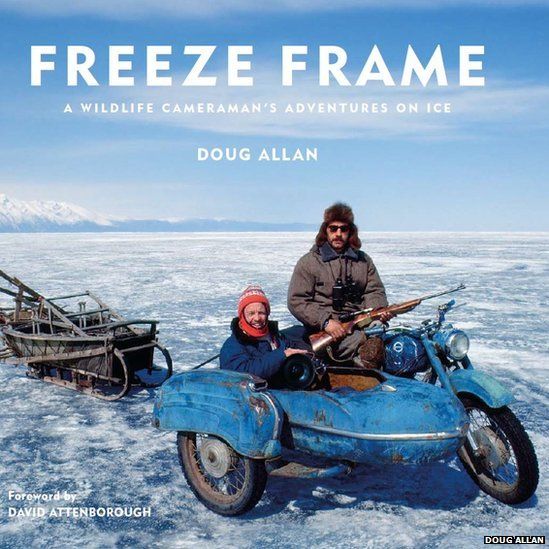
My next guest is Doug Allen - the award-winning photographer and cinematographer.  You may not know his name, but you will undoubtedly know his work.  He specialises in underwater photography in polar regions, and worked on some of the groundbreaking natural history programmes produced by the BBC. He studied Marine Biology at Stirling University before becoming a commercial diver. In the 70s, he joined the British Antarctic Survey and began a love affair with the polar regions that still endures.  He began making films for TV in the late  80s, working on 'Survival' and  then on The Blue Planet, Planet Earth, Life, Human Planet, Frozen Planet, Expedition Iceberg, Ocean Giants, Forces of Nature and many others. He's filmed many 'screen firsts' including orcas attacking grey whales off California, polar bears trying to capture belugas in a frozen hole in Arctic Canada, and killer whales washing seals off ice floes in Antarctica.

As a scuba diver based in  Bristol, the home of the BBC's Natural History Unit, I have had the great fortune to meet a number of the people involved in making these films, so Doug in some ways, serves as representative for all of them. I have tremendous respect for the cameramen and women, scientists, presenters, technicians, editors, directors and producers involved in making these incredible and world-renowned documentaries, but Doug stands out because of his fearlessness.

Like many older divers, Doug has a very calm and matter-of-fact way about him, even when talking about potentially life-threatening situations.  Consider how potentially dangerous diving can be: Add to that the challenging environmental conditions in the polar regions, and then throw in hungry polar bears, inquisitive orcas and curious walruses, and a calm disposition is critical.  It is his knowledge of the natural world and his experience that informs his fearlessness - not bravado.  I will never forget chatting with him about the time he was filming walruses when one popped up right in front of him and gabbed his head in it's huge flippers ( a fully grown male walrus can be up to 12 feet long and weigh over a tonne and a half.)  He proceeded to calmly explain to me that walruses feed on shellfish by sucking them out of their shells, and that, if he decided to, he could probably have sucked his brain out through his nose. (Maybe not one for the dinner table!)

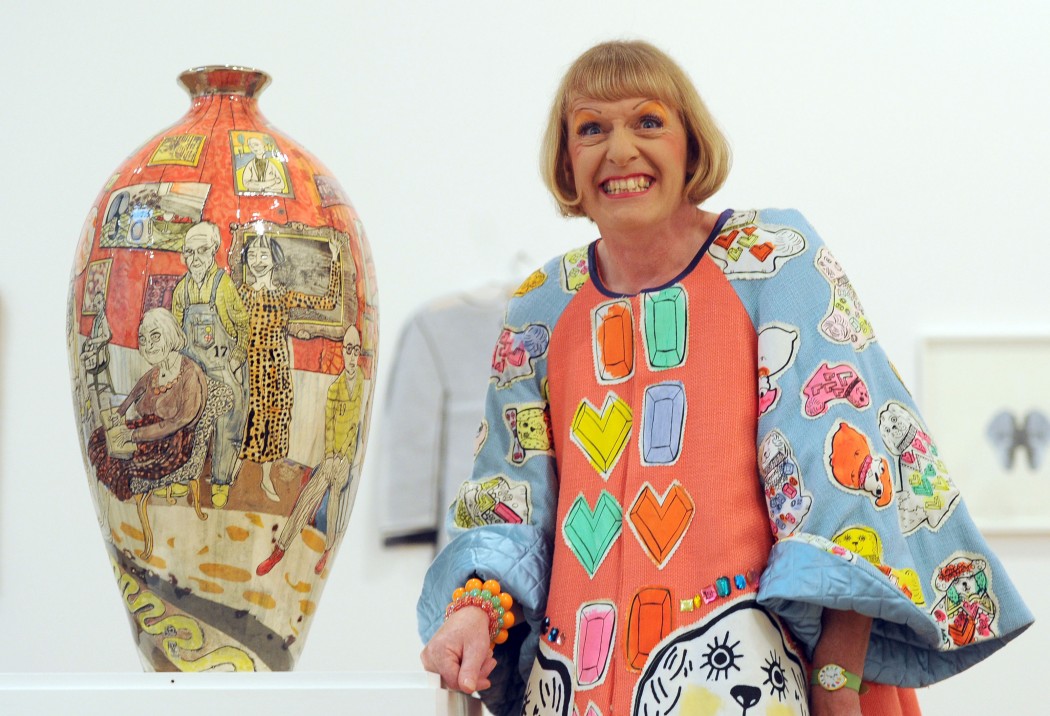
My next guest is artist and Turner Prize winner Grayson Perry.  Anyone who knows me well will be aware of my confused and confusing relationship with art.  I know little about the art world, especially the contemporary one - it is utterly baffling to me.  I do paint and draw, but my images are photographic representations or geometric ramblings - pleasant to look at - but they express little, I suspect, beyond my cognitive visual style.  This has always frustrated me, and my frustration has, in the past, found a target in the contemporary art world. (Many of it's luminaries 'walked the walk' but didn't bother to 'talk the talk', presumably because they would be found to have nothing of consequence to say).  When I watched coverage of 'The Turner Prize' - I disliked most nominees because of their unwillingness or inability to explain their work satisfactorily to make it more accessible to people.  ('Installations' like Tracy Emin's Unmade Bed still leave me cold.)  Without this explanation, it was lost on me. I cannot guess at the meaning of most contemporary artwork by just looking at it - it's much like looking at someone and trying to guess what they are thinking - impossible for someone with Asperger's...

Grayson Perry won the Prize in 2003, and changed my view of the art world overnight.  He was proof that artists could still deliver meaningful, affecting work that was still accessible to all.  As can be seen by his ceramics, sculptures and tapestries/embroideries, he is also an extremely talented craftsman. What a hero!

Since then, Mr Perry has proved to be a true cultural icon. Genuinely interested in the  "prejudices, fashions and foibles" of UK society, he produced the only TV programme worth watching about the entire Brexit debacle, and his current 'Art Club' programme has been a delight.  Anyone with Asperger's appreciates plain-speaking, and Grayson's ability to put art back where it belongs - in the hands of people everywhere, from all ages and backgrounds is a joy to watch.  I love the dichotomy of his hugely colourful character and his down-to-earth inspirations, and no imaginary dinner party of mine would be complete without him. (A spectacular dress is always a plus, Grayson but the dress code is informal - I don't imagine I could get many of my guests to be comfortable otherwise!)

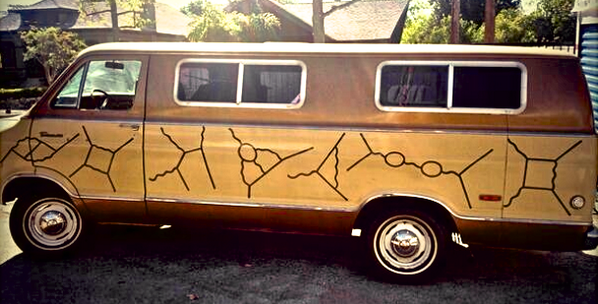
My next guest (and the last for this part) is the physicist Richard Feynman.  (1918-1988) Yes I know I said they wouldn't all be physicists, but I simply cannot leave him off the list.  I first heard about Richard Feynman in my early 30s when I was looking into the famous 'double slit' experiment. (This is the experiment that is a cornerstone of quantum mechanics that showed how electrons behave as both a particle and a wave.)  This is when my obsession with physics really got started.  Feynman was a colourful character, as well as being a groundbreaking theoretical physicist.  He did not let anything get in the way of his curiosity, or his passion to prove his point!  His tales of working on the Manhattan Project in Los Alamos, for instance -  his tendency to demonstrate a lack of security by picking locks on everyone's filing cabinets - and his time in Brazil, affecting enormous change to the way physics is taught (and playing bongos) are highly entertaining.  I won't go into his work in theoretical physics - anyone who would be interested in it would surely already know it in detail, but suffice it to say that the Nobel Prize winner's tremendous contribution to science is without question.

Unusually for people in his field, Feynman was happy to embrace the medium of TV, so there is plenty of material around to get a sense of the man, his humour and his thought processes.  He was a great teacher, (his series of lectures on Physics, delivered in the early 60s at Caltech, are legendary and referred to in physics circles as 'The Great Explainer' - they remain required reading for anyone choosing to study physics) and a dogged investigator (he was involved in the Rogers Commission that investigated the Space Shuttle Challenger disaster before his death in 1988. A curious character with a great mind.  He'd bring with a wealth of experiences and stories and would probably fix my toaster too.

Until next time, when you will meet my final set of guests.

  Doug Allan: A life capturing the natural world on camera - BBC News Parents would rather have a tomboy than a sissy": An Interview ...Richard Feynman on the Meaning of Life – Brain Pickings Michael Shermer on Twitter: "Seamus Blackey restored Feynman's Van ...

Wednesday, 3 June 2020

The Art of Escape (Part 1)

I am not prone to daydreaming, as a  rule.  However, I recently found myself  doing exactly that at times during this Lock-down. I somehow dredged up the old classic of who my ideal dinner guests would be, if I could choose 10 people (living or dead, real or fictional). I don't know if anyone even does this kind of daydreaming any more - choosing dinner guests seems terribly quaint and old fashioned these days, but it's a setting that seems to demand a certain civility that is sadly lacking in today's society.

Anyway, on to the fun bit... (Please feel free to make up your own list as you follow mine - it's imaginary, so they can be living or dead, real or fictional. You choose.)

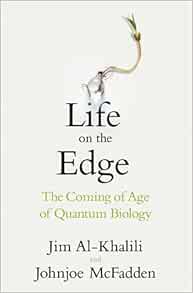
Any friends of mine will be in no way surprised at my first choice of guest:  Prof. Jameel Sadik "Jim" Al Khalili, OBE FRS. He is a quantum physicist, author and broadcaster. Professor of Physics and Head of Public Engagement in Science at the University of Surrey in Guildford. He is a regular science presenter on BBC TV and radio and a recipient of the Royal Society Michael Faraday medal, the Institute of Physics Kelvin Medal and the very first Stephen Hawking Medal. He is the current president of the British Science Association.  An impressive list, no?

It is Mr Al Khalili's quietly compelling style of writing and presenting that enchants me.  I have read many books on the sciences and watched many documentaries, but none delight me as much as Jim's with their gentle, emphatic narratives and inspiring visuals of ground-breaking experiments.  I particularly admire his respect for his cultural home's contribution to science and mathematics, and found his 'Science and Islam' documentary fascinating.  His respect for other scientists' contributions is also clear, particularly in his radio series 'The Life Scientific'.

I know no-one better at packaging up the utter nonsense of quantum physics in easy to read books.  His explanation of the role of quantum entanglement and antioxidants in the robin's mysterious navigation systems is entirely accessible to an enthusiastic amateur like myself.  I'm sure scientists and researchers provide considerable chunks of the books and documentaries, but his particular style of weaving stories and facts around ground-breaking developments in science taps directly into my love of science.  I bet he has some good stories, too!

Stop creeping away - I haven't chosen 10 physicists for my dinner party, and Einstein is not invited!

The second name on my list is Simon Reeves, the travel presenter.  Mr Reeves is not an academic.  I read recently an excerpt from his biography describing the aimlessness of his early life and career.  What is so endearing about him is his wonderful sincerity and acceptance of people from all walks of life, wherever he finds them and whatever their circumstances.  I struggle to understand how someone of such clear principles can remain so fair and objective in their summary of a place and it's people.  But his curiosity and his sincerity are clear.  This is not a man who uses clever language to camouflage his feelings as he interviews a Somali pirate at the door of his prison.  He is genuinely open and willing to hear their stories, their experiences and their reasons. (The universally reviled pirates turn out to be displaced fishermen, desperate to make a living in a war zone.)

In his programmes, he often chooses geometric or ocean borders as routes which means an arbitrary assortment of destinations. (Tropic of Cancer, Tropic of Capricorn, Indian Ocean, Mediterranean etc.) This ensures that we don't fall into that comfortable pattern of similar destinations and similar, familiar stories. The encounters and contrasts this throws up are always interesting and sometimes staggering.  In Mediterranean, he looks at the economic, cultural, social, political, religious and environmental issues of the countries bordering the Med. He speaks to businessmen, politicians, farmers, asylum seekers, monks and criminals.  As each encounter ends, you are left with the feeling that the views of those people are completely understandable, even if you disagree completely with what they are doing.

I think his visit to a rubbish dump in the idyllic Maldives, after exploring the well-known vistas of turquoise seas and white sand coral atolls, was one of the most affecting scenes I have seen in a travel programme.  The overflowing, burning pile of waste that sat in the middle of that astounding beauty was shocking.  Conversely - there is the wonderful woman in Gaza who had returned home, after studying engineering in Britain, to use her expertise and innovations to turn rubble from the ruins into bricks for home-builders, (the embargo on building materials imposed by Israel meant that homelessness was rife.)

His slightly 'goofy' delivery and disarming way with people belie, I think, a deeply concerned and humane soul.  Would that I could connect with people in such a way!  So, Mr Reeve will be coming along.  And stories?  Definitely!

I can see this dinner party becoming serialised!  I think I'll make this the last one for now.

My next choice would be the inimitable John Lloyd.  I first heard of Mr Lloyd in tandem with his great friend, Douglas Adams - he worked on the radio series of 'The Hitchhiker's Guide to the Galaxy'.  Now, I feel it only fair to explain that, although many of my interests can appear very serious and dry subjects to the uninitiated, I have always had a sense of humour, and a sharp one at that.  And it seems that Mr Lloyd has been lurking in all the places that I have found my brand of humour over the years.  I say lurking, as he is a writer and producer so his face is rarely seen, however, the impression of his wit and humour are evident wherever he has had involvement.

He has either written or produced on most of the TV comedy series I have loved over the years - Hitchhiker's, Not the Nine o'clock News, Blackadder, Splitting Image and QI, (which is the only thing I find worth watching on terrestrial TV these days!)  His books, (not to mention all the QI Fact books) include two of my favourites (co-written with Douglas Adams):  "The Meaning of Liff", and "The Deeper Meaning of Liff".  These two tiny volumes are easy to miss on the bookshop shelves, but they are priceless.  Born out of a long friendship with Adams, and a holiday in Corfu, what had begun years before, as a word game suggested by Adam's English teacher, became one of the most lastingly funny things I have ever read.  I can almost imagine the drunken deliberations in the taverna by the beach.

The Meaning of Liff was described as a “dictionary of things that there should be words for, but aren’t”. The definitions describe things familiar to everyone; the words themselves are all place names. For example, an Ely is “the first, tiniest inkling that something, somewhere has gone terribly wrong”; Kettering is “the marks left on your bottom and thighs after sitting sunbathing on a wickerwork chair”; and Scrabster (a village in Caithness) is “one of those dogs that has it off on your leg during tea”.

I was 15 in 1983.  In the preceding year, I had gone from being an artistically and academically gifted student who never received less than an A, to a truanting, academically failing, desperately confused wreck.  I had no friends in school or outside.  My parents thought perhaps I was on drugs, and didn't try to hide their disappointment (how dare their talented child not live up to their expectations).  In fact, I was just another teenager with undiagnosed Asperger's, trying to survive a hostile and changing world that was more bewildering by the day.  The Meaning of Liff was one of the things that got me through that time.  It tucked easily into my pocket and would take it everywhere, secretly guffawing into my jacket whenever I turned a page.

Yes, Mr Lloyd is an important addition to my list of guests. You'll have to tune in next time to see if the late Mr Adams will be joining him!

Life on the Edge: The Coming of Age of Quantum Biology: Amazon.co ...  


Wednesday, 25 March 2020

The Silver Lining

It is most peculiar to see the vast majority of the population of the UK and elsewhere struggling with the task of social isolation. From the perspective of an Aspie, this all seems fairly commonplace:  Avoid large groups; keep your distance, avoid unnecessary journeys... However, it is fast becoming clear just how difficult this is for the majority of NTs.

With the 'Lockdown' in place, there are more and more examples every day of people failing to manage their own isolation and their distancing from others.  How can one expect a loving son or daughter to stay away from a seriously ill parent, a brother from a sister, a teenager from his friends?
I have always looked upon these connections with jealous eyes, but now I find myself strangely thankful that I do not feel the pain of their loss so keenly.  It's hard to quantify the value of something you rarely experience.

As I watch the news reports that are filled with a bizarre combination of human suffering, dry Government statements and overtly up-beat stories of people attempting to help out in their own way, I recognise the same characteristic hit or miss strategies that litter my own attempts at social connection. These are people attempting to connect with (so to speak) their hands tied behind their backs.  The Government and Health organisations are rightly concerned about the effect on peoples' mental health:  Anxiety is high, and not just because of fears about becoming ill, buying food and getting paid.  People have been cut off from their support networks, their friends, their families.

Oddly enough, I find my anxiety is less every day.  I was very confused and anxious when this emergency began:  People not behaving as expected is a particular issue for me, so the absence of logic demonstrated in panic buying, pushing in queues and the failure to follow social distancing rules was particularly affecting.  Now I am working from home and I have a better idea of what the next few weeks look like, my anxiety is dropping.  There is no need for social interaction beyond my own home.  I am forced to communicate using my preferred methods - email and texts, and I am in control of who I choose to interact with, and when.  I seldom experience these luxuries in my usual day.

It appears I also have the advantage when it comes to finding things with which to occupy myself.  I need structure.  In everything, all of the time.  I have grown used to creating structure where there is none, and this skill has been at the core of all the jobs and roles I have ever undertaken.  Therefore, I have had no concerns about moving to a home-working system, and arranging home-schooling for my son.  I have an endless supply of ideas to occupy my time usefully, demonstrated by my long list of hobbies and pastimes.  Keeping busy is important to me, and I am rarely stuck for something to do.  I have enjoyed tackling the challenges presented by having 3 IT-heavy consumers working under the same roof.  We each have our space and we each have our schedule.  We meet in the middle for meals and fresh air, and it's going swimmingly.  I can appreciate, however, how difficult this has been for others, especially for those with less experience with IT.

There has been much made of the wonderful work of NHS employees and the armed services and their response to this emergency, and rightly so.  I must pause here, however and acknowledge what a different experience this would be for everyone, if we did not have the access to technology that we we enjoy in this country.  It seems that, as soon as a high-street business closes it's doors, a YouTube Channel opens.  As soon as a relative is isolated, a Skype call is activated.  As soon as a school closes, online lessons begin.  Without the expertise of programmers, developers and IT staff everywhere, these connections would be impossible.  The speed with which they can be called into action and the ease with which they can be accessed and used is miraculous.  When I think about the number of Aspies I know who work in these roles, I feel very proud.  Where would we be without them?

NT or Aspie, I hope you weather the coming weeks with the minimum of anxiety, and hope you can stay safe and well.  There is always a silver lining.


A solar eclipse showing the corona.  A silver lining indeed.